
What Is Menière’s Disease? Causes, Symptoms & Treatments
From vertigo to hearing loss, here’s what to know about this inner ear disorder.
Menière’s disease is a chronic inner ear condition that affects both hearing and balance. It often causes sudden episodes of vertigo, a spinning sensation that can last for hours, along with tinnitus, ear pressure, and hearing loss. These symptoms tend to come and go, sometimes with long periods of relief in between. While doctors haven’t identified a clear cause and there’s no cure, treatments can help manage the episodes and reduce their impact on daily life.
Causes
Doctors haven’t pinpointed a single cause of Menière’s disease, but they have some strong theories. Many experts believe it’s linked to a buildup of fluid in part of the inner ear called the membranous labyrinth. This buildup may be triggered by a mix of factors, such as genetics, autoimmune reactions, or viral infections. Other possible contributors include allergies or problems with blood flow in the ear. While none of these causes are confirmed, they help guide treatment approaches.

Symptoms
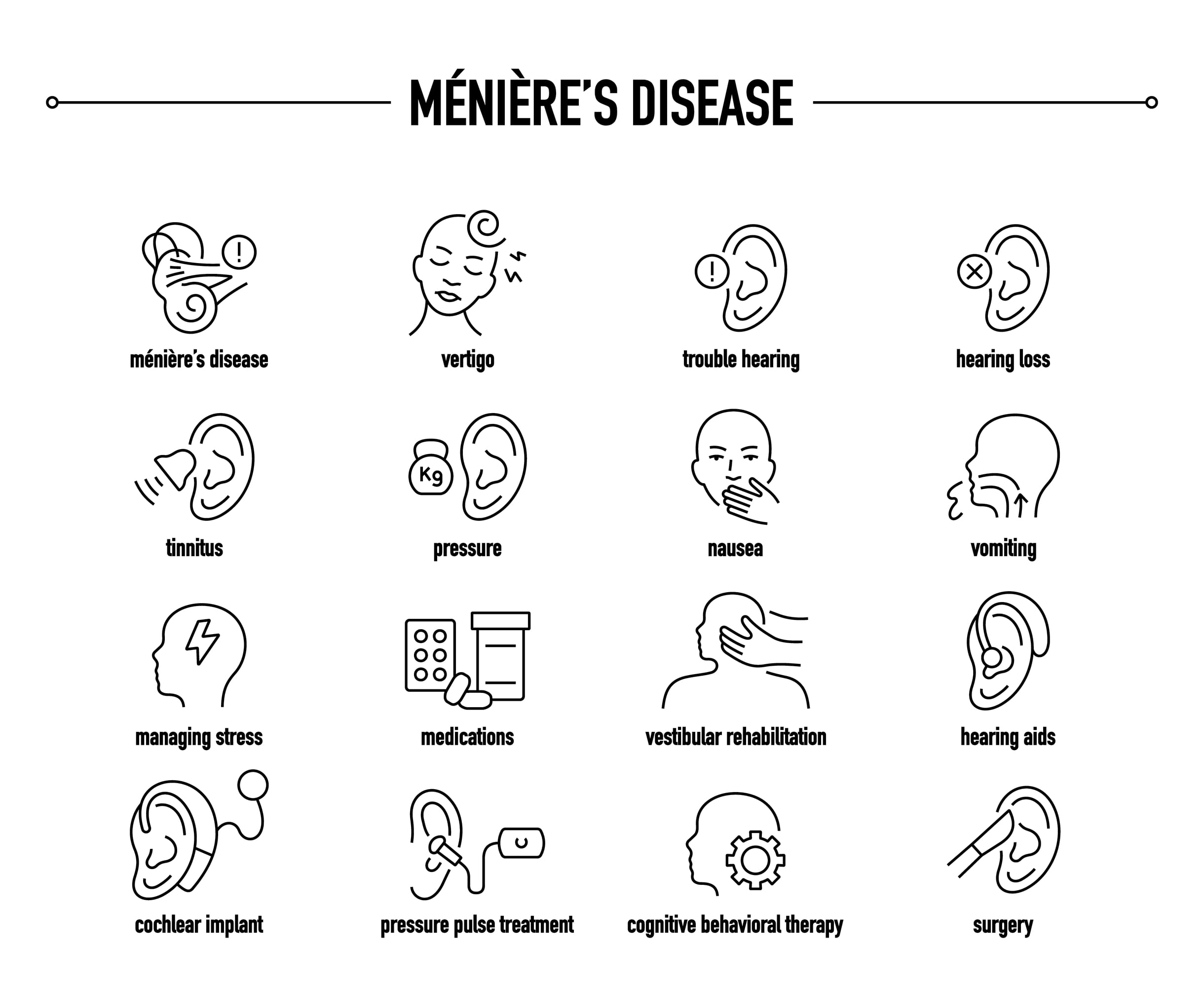
Menière’s disease usually affects one ear and causes a mix of symptoms. One of the most common is tinnitus—a ringing, buzzing, or hissing sound in the affected ear. Hearing loss may also develop, either partially or completely, and it can come and go or worsen over time. Some people feel a sense of pressure or fullness in the ear, like it’s plugged. These symptoms tend to appear during an episode and may improve between attacks.
Balance and Other Symptoms
Because Menière’s disease affects the inner ear, it can seriously disrupt your sense of balance. Episodes often involve vertigo—a spinning sensation that can last from 20 minutes to several hours. During a flare-up, people may feel dizzy, nauseated, or unsteady on their feet. In more severe cases, vertigo can cause vomiting, sweating, and even falls. Headaches are also common. Some or all of these symptoms can happen at once, making episodes hard to predict and difficult to manage.

Definite vs. Probable Meniere’s Disease
Doctors classify Menière’s disease as either definite or probable based on symptoms and testing. Both require at least two spontaneous episodes of vertigo lasting 20 minutes to 12 hours. For a definite diagnosis, a hearing test must show low- to mid-frequency hearing loss in the affected ear. In both cases, the person must also report tinnitus or a feeling of ear fullness. Other causes for the symptoms must be ruled out before confirming Menière’s.

Testing for Meniere’s Disease
Doctors usually begin with a hearing test to check for loss in one ear. Patients wear headphones and respond to various tones and volumes to measure how well they hear. Some tests check the ability to distinguish between similar sounds. To evaluate balance, a common test is electronystagmography (ENG). During ENG, electrodes placed around the eyes track involuntary eye movements as warm and cool water are introduced into the ears. Abnormal responses may indicate inner ear dysfunction.

kaisersosa67 / Getty Images
Medications
There’s no cure for Menière’s disease, so treatment focuses on managing symptoms. Anti-nausea and anti-anxiety medications can help during vertigo episodes. Some doctors also prescribe allergy medications or diuretics to reduce fluid buildup in the inner ear, which may lessen dizziness. While these treatments can provide relief, they don’t stop the disease from progressing or prevent long-term hearing loss.

Tassii / Getty Images
Lifestyle Changes
Doctors often recommend dietary and lifestyle adjustments to reduce the frequency or severity of symptoms. A low-sodium diet may help control fluid retention in the inner ear, though the evidence is limited. Avoiding caffeine, alcohol, and known migraine triggers—like stress or irregular sleep—may also be beneficial. While these strategies aren’t proven to stop Menière’s disease, some people find them helpful in managing flare-ups.

ClarkandCompany / Getty Images
Physical Therapy and Counseling
Because most other non-surgical treatment methods are unproven or temporary, some experts prescribe physical therapy and counseling. Meniere’s disease dramatically hampers balance over time. Physical therapy can help train the brain to account for the fluctuations. Counseling can help alleviate the anxiety and distress a person typically feels during episodes of vertigo. Sessions may include learning about the disease and adopting relaxation techniques for moments of stress.

Nicola Katie / Getty Images
Surgery
When Menière’s symptoms are severe and unresponsive to other treatments, surgery may be considered. One common option is endolymphatic sac decompression, a procedure that helps reduce fluid buildup in the inner ear. In rare cases, more aggressive surgeries that affect balance or hearing—such as labyrinthectomy or vestibular nerve section—may be recommended. These procedures carry greater risks and are typically reserved for people with debilitating vertigo who have not found relief through less invasive methods.

shapecharge / Getty Images
The Future
Menière’s disease is unpredictable. Some people experience relief after a few years, while others deal with symptoms for a decade or more. About 30% of people eventually develop symptoms in both ears. There is no cure, but many find that treatments and lifestyle changes make the condition manageable. In most cases, episodes become less frequent or severe over time, allowing people to live active, fulfilling lives despite the challenges.

electravk / Getty Images

Scroll Down
for the Next Article
Popular Now on Facty Health
Disclaimer
This site offers information designed for educational purposes only. You should not rely on any information on this site as a substitute for professional medical advice, diagnosis, treatment, or as a substitute for, professional counseling care, advice, diagnosis, or treatment. If you have any concerns or questions about your health, you should always consult with a physician or other healthcare professional.